

Day 7 – 14.10.2026 – Bekopaka and Big Tsingy
And the next day was Tsingy time! I went for the Big Tsingy which took about 5h of walking through forests and then quite some climbing with a harness and carabiners. The safety line was a bit scattered, it was there but not everywhere. And I was a bit worried about the heat given the situation from the prev day. But I bought a hat at the souvenir store at the hotel and maybe it saved me. But at some point I felt almost like fainting but I was last and everyone wanted photos on all places so I had to wait. It was NOT fun, esp 70m in the air. But the views were worth it. Tsingy is a park where the rock is compressed corals and sealife from millions of years ago and is so fragile that it washes off and breaks and creates these razor sharp edges, soo awesome to see it!
And all the fossil prints on the stone everywhere were awesome. It was worth the trouble. On the way we were passing some people by who walk for 20km to go and sell their produce in the market at Bekopaka and it made me super sad when they wave at us and make a hand gesture for asking for water. I wish I could throw a bottle of water but it is not mine to do it. And it is also horrible that people believe they have to set everything on fire yearly to get new crops. This practice only enriches the soil for a little bit but in the long run it makes it pretty much dead. After 2-3 years people cannot produce anything on that soil anymore so they have to move on and burn new forest area to make way for a new farmland.
We saw many bushfires along the way and half of the Tsingy park was on fire and it was right next to the road, super sad to see, especially how many animals don’t make it. And seeing all the prey birds hovering over the fire, they know it well… This makes me super sad, they will destroy their whole nature and the government doesn’t give a damn while people struggle to even eat and survive and target even wildlife so they can eat something today, ofc they wouldn’t care about nature. This is soo sad 🙁 I hope something changes in this country because it is so rich in culture, but also nature and wildlife. Another issue in Madagascar is that when they do crops they basically only do one type of crop therefore they rely on one harvest per year or two and the rest of the time nothing.
And they are forced to sell their production for pennies to the “collectors”, because there are no roads and they cannot afford to pay for transport to the capital for their produce. These collectors literally give them pennies, for example we visited a salt production area where they work under the scorching sun for hours and hours, scraping salt, filling in bags of 50kg and sewing the bags. They then sell one bag of 50kg for 1000 Ariary (22 euro cents), can you imagine?! And from this all these men share a daily salary of around 1 euro per person daily. This is insane. And all the actual real money gets pocketed by these collectors and their connections who are, in turn, connected to the political elite and do export to Europe, US etc.
And we buy it 30 times that price. And the most important people – those who produce the salt, don’t see almost anything from it. Same with their crops – and also they don’t seem to use any fertilizer, I am not sure why they don’t do it, or do they not know about it or what, but they have cows, they have crops, cows poop a lot so… 2+2=?
Day 8 – 15.10.2026 – Bekopaka, Baobab Alley and Kirindy Night-time visit
So after Tsingy in Bekopaka we headed back, and this time we stayed somewhere super close to Kirindy Forest. And on the way back we returned to Baobab Alley for sunset. So we got to see it at sunrise on the way to Bekopaka and at sunset on the return, sooo cool!
Actually when we passed by for sunset I asked for a receipt, they do not provide any receipts so they couldn’t help and by then I had figured out it is illegal to take flora out of the country and also to bring it in Europe, especially for soil. But one of the women at the avenue said that at the airport they can give me a certificate. So I will try that. If it doesn’t work – I will gift it to Fina and he will send me a photo a hundred years from now to see how it’s growing, it may even have fruits then (they start producing fruit when it is a 100 years old 😀 So that means with growth of 12mm per year in height and 2mm to 1cm in circumference. My plant will be 1.2m tall and 20cm round in diameter 😀 yaay 😀
At the Baobab Alley on the way back from Bekopaka towards Morondava, I saw a guy on a motorbike with a stick with sort of hooks on it, on all sides of the stick, and then ducks tied by their legs with a rope, and that rope was basically how they attached the ducks to the hanging hooks. So many ducks head-down and he was driving this way, and a woman was selecting and picking the ducks while we were around the alley. These sights make me extremely sad, but I cannot do much about it.
Then it was time for Kirindy Forest. We had a night tour after arrival and a day tour the day after. This is a forest where you can see lemurs but ofc only some species. I was really, really hoping to see a mouse lemur, any mouse lemur, as mouse lemurs are apparently a genus and there are species of mouse lemur. And upon arrival we were incredibly lucky to see a tiny mouse lemur, more specifically grey mouse lemur. There were two actually and sooo tiny and cute. ~One was licking the water from the wood at the restaurant and another came by and they fought. Tiny lemur fight 😀 Unforgettable. But we then went on to the woods and saw so many awesome animals, ofc starting with an owl – we kept hearing something call and then found it and it was a gorgeous owl.
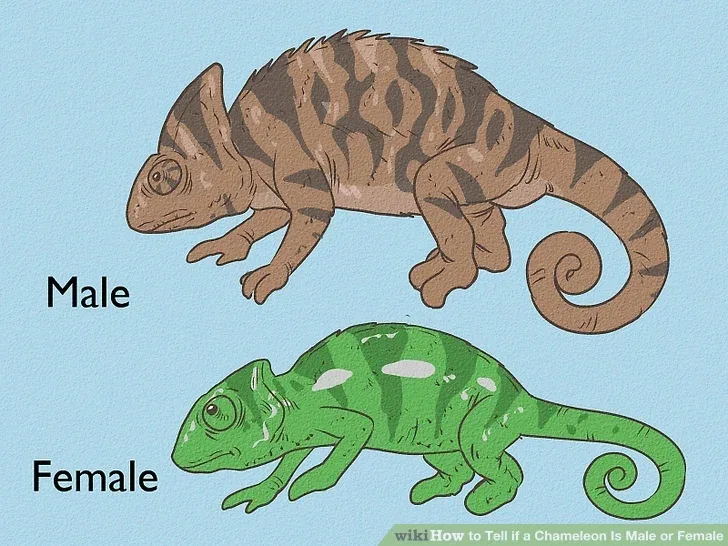
They said it was a scops owl but I think it was something else since a few days after at Reniala I saw a real scops owl and it looks nothing like that one from Kirindy. We saw a juvenile Oustalet’s chameleon too, a grey one, I am still waiting to see the green one. The green is the female usually, taking the colour of the leaves, but the green chameleons only wake up when the rainy season begins so until then you can almost only see the grey males (looking like the tree trunks where they hang). We saw also several species of lemur – Verreaux’s sifaka dancing lemur, red fronted brown lemur and fork-marked lemur. Some of them at night, others at daytime.
Day 9 – 16.10.2026 – Kirindy Forest day tour and Belo sur Mer
But one thing I did not even dare hope to see and that was the only big cat predator on the island – the bizarre looking fossa. BUT… BUT we saw it – first thing in the morning of the day tour. It was hiding under one of the houses in shade at the parking lot, so they lured it out with some meat and ofc there were a gazillion tourists but after lots of pictures, eventually the rangers told everyone to let the animal escape and so the fossa ran towards the forest, but ofc everyone ran after it. So annoying these tourists, saying it ironically because I was one of them, but at the same time I tried to keep my distance. This is the problem with many tourists, some from our group too – they take photos with phones, so basically 3 pixels photo (yeah don’t kill me but it is true – when you download even an iPhone photo, it is totally horrible, or when you zoom it in.
These photos are only suitable for Polarsteps, Instagram and Facebook, but not really for printing or having it as a high-quality wall print for example, for that you need a real camera), so people with the phones want to get as close as possible therefore they scare the animal away. If only they could think a bit more rationally and give the animals some space, and also take a photo and let the others do the same, traveling with a big group would be much more pleasant. But alas… I think I am not really going to travel in group of more than 8 ppl from now on, and not Dutch. (side note). But anyway, so we saw the fossa. That was an awesome start of the day, along with the super closeup with lemurs at the parking lot too.
Then we proceeded to the park and saw ofc again lots of lemurs and I spotted some quite cool birds, like a super beautiful Sickle-Billed Vanga. There was also a bird I kept hearing the call of but had no idea what bird it was. I thought it was a dove since its sound is a bit similar and low-toned like some of the doves I’ve heard when traveling but it ended up being the call of a Malagasy Coucal, such a beautiful bird! We also saw (and I was jumping for joy) a nightjar sleeping on the ground. OMG! It was soo cute! Such a cutie patootie is this one!
And a mouthful too – doesn’t shut up for the whole night 😀 And we saw two species of Coua birds and other wildlife. I loved it, except the mosquito part. It was not the rainy season yet but it was full of mosquitoes, so a lot of DEET is required. In fact, like a lady from our group said – DEET is my perfume these days. Same for me 😀 And I shower in it due to the fact that the first week I had no malaria pills and started only after a week, that meant that I am protected from that time forwards but not the first week. So I was a bit paranoid with this malaria thing. Also because my roommate who has travelled to 96 countries so far, told me in Congo or idk where exactly she said, 5 out of 15 people got malaria and had to go to the hospital for quinine treatment.
So yeah, a bit of a paranoia.
But first, after the Kirindy forest, we left for Belo sur Mer. After leaving the hotel, right next to it, was a school we visited. We saw many happy kids studying, and they sang songs for us, it was so heartbreaking and cute at the same time. They literally have nothing and even their clothes are half ripped off. It is quite a sad picture. But we got them some waffles and gave them to the teachers to distribute later on and gave some tips to the teachers and director for putting up with us. This was an enriching experience to say the least. We arrived in Belo Sur Mer, which was a fisherman’s village, where Sakalava people live. Sakalava people are from African origin. In the 17th and 18th centuries, they built Madagascar’s first major empire, trading zebu cattle and slaves with Omani Arabs and Europeans in exchange for firearms.
This military advantage allowed them to dominate large parts of the island until they were subdued by the Merina Kingdom in the late 18th and early 19th centuries, and later fell under French colonial rule in 1896. After arrival at Belo, we had some free time and next to our hotel there was sort of part of the sea which has withdrawn its water due to the low tide until the evening, exposing lots of crabs, shells with crabs inside and other sea creatures that provided a real feast for plovers there! And that, in turn, was a jackpot for me! So I put on my swimsuit with the intention to go to the sea after that patch that has withdrawn but it took me a while due to lots of photos I had to take 😀 And then I was alone, so I carefully looked around and dropped my bag in one of the canoe boats so it is not immediately visible to passers-by and went to swim but the sea was ankle-depth for no matter how much further you walked, so I basically just sat down and made myself wet a bit to cool down and then left the sea.
Then I was “attacked” by like 10 kids 😀 So I started taking photos of them and with them and when I would show them the photos they were so happy. Super cute kiddos. Then, more people from my group arrived and someone said they won’t go into the water so they can keep an eye on our bags and I went to swim with them but it was again that shallow, or maybe knee-depth. One of the men was stung by a blue jellyfish and it looked pretty horrible but he’s ok. They say it’s not yet the season for them but it clearly is. Along the way to the water I saw what I think was an ibis but the Merlin app recognized it as something else so I need to analyze it further but also a super cute plover bird – cuter than the rest, crab plover.
Eventually we had to rush back to be in time for a village visit and I got myself and Fina a coconut and we walked around and lost the others since they didn’t want to wait for us as the coconut peeling took like 15 min or more. And finally, I saw a bee eater and got my best photo of it in Belo on top of a wooden pole at sunset light. Gorgeous bird!
Belo is famous for fishermen, like I said. So everyone who does this needs to have a boat. And so people begin to build a ship and they have to provide all the wood and other materials for it and then hire someone to build it ofc. The fee for a build of half of a boat we saw, was 2000 euro. This is a good amount at first glance for the poverty level here, but also consider that this is the amount the builder will get to build it, but he will likely not build it at once, but along many months since the people are poor and don’t have all the materials and sometimes it can take 15y to find everything necessary and build the boat. So there were quite a bit of half-built boats along Belo sur Mer and that is the reason, they are not abandoned.
I am not sure how it works with leaving this wood exposed for years and years until you get the boat built though. I imagine it would erode and become brittle or bad for the build and unsafe. But I may be wrong. After the village visit we returned back to our hotel. I must say the hotels (mostly bungalows) we are getting around the seaside and in the capital, are quite good. They all had mosquito nets over the beds and at the windows. They were mostly built of natural materials and super Instagrammable. The only issue was the heat. I have to sleep naked most of the night due to the heat and especially when you surround yourself with the net, even with ventilator it doesn’t do much of a difference.
And at the seaside in the morning it actually gets cold. Which is welcome ofc, but at the same time during the day it’s horrible.